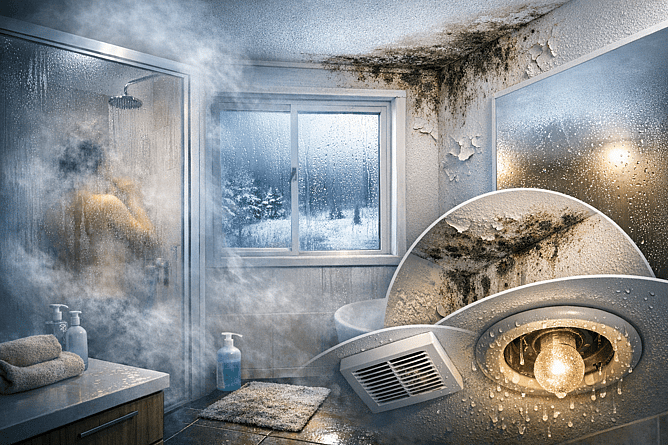
As the weather cools down and windows stay closed, bathrooms become one of the biggest problem areas in the home during autumn and winter. Warm showers, cold air, and poor ventilation create the perfect conditions for moisture, condensation, and mould to take hold.
The good news?
Many winter mould issues can be reduced or prevented entirely with proper bathroom ventilation.
Here’s what homeowners should know — and what to watch for — before winter sets in.
Why Bathrooms Are a Winter Moisture Hot Spot
Bathrooms naturally produce a lot of warm, moist air. In warmer months, this moisture often escapes through open windows. In cooler months, it gets trapped.
Common winter factors include:
Hot showers generating steam
Cold surfaces (ceilings, mirrors, windows) causing condensation
Windows staying closed to retain heat
Extraction fans that are underpowered, ageing, or rarely used
Over time, this trapped moisture leads to mould growth and long‑term damage
Signs Your Bathroom Ventilation Isn’t Coping
If you notice any of the following, your ventilation may not be doing its job properly:
Mirrors staying fogged long after showers
Visible mould starting to form on ceilings or corners
Peeling paint or bubbling around light fittings
The bathroom feeling damp even when not in use
Musty smells that linger
These are early warning signs — and autumn is the ideal time to act before winter moisture levels climb further.
Why Mould Is More Than a Cosmetic Issue
Mould isn’t just unsightly. Left unchecked, it can:
Affect indoor air quality
Trigger asthma or respiratory symptoms
Damage paint, plaster, and ceilings
Put strain on electrical fittings and lighting exposed to moisture
In bathrooms, where electricity and water exist in close proximity, managing moisture correctly is also a safety consideration, not just a comfort issue.
What a Good Bathroom Fan Should Do
A well‑functioning bathroom fan should:
Clear steam quickly during and after showering
Reduce condensation on mirrors and ceilings
Run quietly and consistently
Be sized appropriately for the room, not just “installed and forgotten”
Many fans installed years ago weren’t designed to cope with modern usage or sealed homes, especially during winter.
Everyday Habits That Help (Alongside Proper Ventilation)
While a good fan is essential, these habits can also help reduce moisture:
Always use the fan when showering
Leave it running for a short time after use
Keep internal doors open where possible to allow airflow
If good habits still don’t solve the problem, it’s a strong indicator that the ventilation itself needs attention.
Why Autumn Is the Best Time to Fix Ventilation
Autumn gives homeowners a valuable window to:
Address mould before it spreads
Upgrade or replace ineffective fans
Improve comfort and air quality ahead of winter
Avoid moisture‑related issues becoming harder to manage later
Once winter is fully underway, moisture problems are more persistent and harder to control.
Final Tip: Dry Air = Healthier, Safer Homes
Good bathroom ventilation isn’t just about preventing mould — it’s about protecting your home, your health, and your electrical safety throughout the colder months.
✅ Less moisture
✅ Less mould
✅ Better air quality
✅ Safer electrical areas
Winter mould problems rarely appear overnight — they usually build up over time. Addressing ventilation early can make a big difference to comfort, air quality, and long‑term home maintenance.
If you’re unsure whether your current bathroom fan is doing enough, a licensed electrician can assess your setup and recommend the right solution for your home. Making small improvements now can help keep your home drier, healthier, and more comfortable all winter long.